A Practical Guide to Key Standards for Agricultural Tractors and Trailed Vehicles

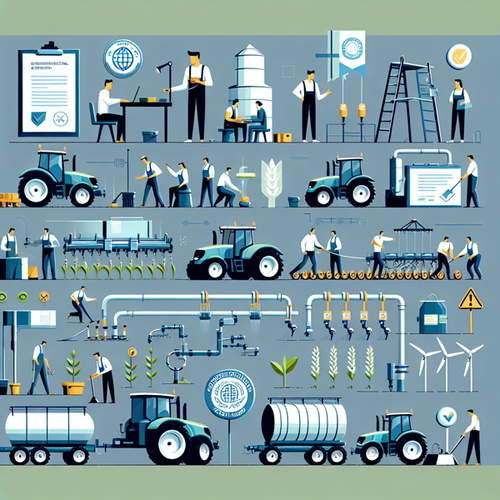
Agriculture is rapidly evolving with digitalization, automation, and modern machinery now at the heart of efficient, safe, and productive operations. For businesses handling agricultural tractors and trailed vehicles, aligning with up-to-date international standards is more crucial than ever. This guide explores four important agricultural standards—covering lighting, hydraulic couplings, three-point linkage systems, and front-mounted equipment—that ensure safety, compatibility, performance, and regulatory compliance. Implementing these standards isn’t just about fulfilling regulations; it’s about driving productivity, maximizing operational security, and enabling business scalability as new technologies emerge.
Overview / Introduction
The modern agriculture industry is facing a pivotal transformation. Tractors and trailed vehicles are not just basic tools—they are smart, multifaceted machines that power everything from precision seeding to real-time crop monitoring. With this complexity comes the need for rigorous international standards. These requirements are vital for:
Ensuring operator safety
Facilitating seamless integration of implements and attachments
Supporting roadworthiness and compliance with national regulations
Accelerating productivity and minimizing downtime
Adopting new digital and automation technologies safely
This article demystifies four key standards, helping agribusiness leaders, technicians, and equipment owners understand precisely what each covers, why these specifications are essential, and how compliance can streamline operations and future-proof your business.
Detailed Standards Coverage
EN 17750:2023 - Lighting and Light-Signalling for Mounted Implements
Agricultural and forestry machinery - Installation of lighting and light signalling devices on mounted implements
The visibility of agricultural vehicles on public roads is critical for safety. EN 17750:2023 standardizes the installation of lighting and light-signalling devices on mounted implements—whether front or rear—attached to tractors, self-propelled machines, trailers, or towed equipment.
This standard specifies:
The types and locations of lamps, reflectors, panels, and markers required for both front- and rear-mounted implements
Min/max heights and configurations to maximize visibility
Operator’s manual requirements detailing installation and adjustment instructions
Scenarios when vehicle lighting is insufficient, requiring additional devices on implements
Harmonized provisions inspired by UN and EU regulations, tailored for equipment that isn’t classified as a vehicle but routinely travels on public roads
Who needs to comply:
Manufacturers of agricultural and forestry implements
Dealers and fleet operators attaching or modifying mounted implements
Anyone responsible for vehicles used on public roads
Practical implications: Implementing EN 17750:2023 reduces the risk of road accidents, supports national compliance, and ensures a consistent approach across machinery from different brands. For businesses introducing automated and autonomous equipment, these lighting specifications are critical to regulatory acceptance and public safety.
Key highlights:
Covers all major lighting and signalling devices: direction indicators, position lamps, marker lamps, retro-reflectors, and more
Includes detailed annexes with performance and installation criteria
Offers flexibility for pivotable or removable lighting, essential for multipurpose machinery
Access the full standard: View EN 17750:2023 on iTeh Standards
SIST ISO 5675:2015 - Quick-Action Hydraulic Couplers for Tractors and Machinery
Agricultural tractors and machinery - General purpose quick-action hydraulic couplers
Efficient hydraulic power transfer between tractors and implements is foundational in agriculture. SIST ISO 5675:2015 addresses the general purpose quick-action hydraulic couplers that connect a tractor’s hydraulic system to its implements (excluding braking circuits).
The standard covers:
Essential interface dimensions (as referenced in ISO 7241-1)
Operating requirements to ensure reliability and safety
Definitions for male and female coupler parts
Guidance for frequent connection/disconnection without tools—critical for agile field operations
Who needs to comply:
Tractor and equipment manufacturers
Operators using multiple implements
Maintenance teams and agricultural contractors
Practical implications: Consistent hydraulic coupler standards mean faster implement changeovers and reduced risk of hydraulic failure. For businesses deploying digital agriculture tools, these specifications streamline interoperability—especially in mixed-fleet environments or when renting or sharing machinery.
Key highlights:
Guarantees compatibility and interchangeability between different brands and models
Supports increased field efficiency thanks to quick coupling/uncoupling
Strengthens safety by standardizing pressure and operational requirements
Access the full standard: View SIST ISO 5675:2015 on iTeh Standards
SIST ISO 730-2:1995 - Three-Point Linkage for Narrow Tractors
Agricultural wheeled tractors – Three-point linkage – Part 2: Category 1 N (Narrow hitch)
Attaching implements to the rear of narrow tractors requires a specialized hitch system. SIST ISO 730-2:1995 sets out the standardized dimension and configuration requirements for Category 1N (narrow hitch) three-point linkages.
This standard includes:
Specific criteria for hitch point dimensions and positioning
Compatibility with tractors up to 35 kW drawbar power
Minimum lifting power requirements per drawbar kilowatt
Detailed tables and figures for clear, consistent equipment connection
Who needs to comply:
OEMs designing narrow-gauge tractors (used in vineyards, orchards, and specialized crops)
Implement manufacturers targeting this tractor sub-segment
Custom operations on smaller or restricted-access fields
Practical implications: Harmonized linkage dimensions eliminate compatibility issues, reduce risk of implement detachment or failure in tight spaces, and make it easier for growers to adapt machinery as needs change. In specialty agriculture, this means less downtime and more productive workdays.
Key highlights:
Covers rear-side implement/hitch attachment for narrow tractors
Specifies clear minimum lifting capacity to ensure performance
Improves interchangeability for a wide variety of rear-mounted tools
Access the full standard: View SIST ISO 730-2:1995 on iTeh Standards
SIST ISO 8759-1:2015 - Front-Mounted Equipment: PTO and Three-Point Linkage
Agricultural wheeled tractors - Front-mounted equipment - Part 1: Power take-off and three-point linkage
Front-mounted implements are increasingly common for improving field efficiency and maximizing tractor utilization. SIST ISO 8759-1:2015 establishes standardized dimensions and requirements for attaching equipment to the front of agricultural tractors.
The standard specifies:
Requirements for front power take-off (PTO) types and spline configurations
Dimensions for front three-point linkages, matching various implement categories
Association with a power lift for optimal attachment, adjustment, and lifting
Applicability details: not relevant for tractors designed to operate equally in both directions (see ISO 500, ISO 730-1 for such cases)
Who needs to comply:
Tractor manufacturers and aftermarket equipment suppliers
Farmers seeking to maximize versatility with front-mounted tools (e.g., mowers, snowblowers, or weights)
Agribusinesses integrating advanced, multi-function vehicle solutions
Practical implications: Standardized attachment points and PTO dimensions mean easier adoption of new front-mounted implements, less risk of mechanical incompatibility, and smoother integration with digitally-controlled or automated hardware. This is a foundation for expanding tractor roles beyond traditional rear-mounted operations.
Key highlights:
Ensures safe and reliable front-mounting of PTO-driven implements
Supports standardized connection, adjustment, and lifting
Facilitates faster adoption of new technologies and implement designs
Access the full standard: View SIST ISO 8759-1:2015 on iTeh Standards
Industry Impact & Compliance
How These Standards Shape the Future of Agricultural Operations
Agricultural standards serve as the backbone of safe, efficient, and interconnected operations across farms and contractors worldwide. Adhering to these requirements delivers:
Legal Compliance: Meeting national traffic and safety regulations avoids fines, machine impoundments, or project delays.
Worksite Safety: Proper lighting, coupling, and attachment reduce accident rates for operators and bystanders alike.
Cross-Brand Compatibility: Farmers can confidently switch implements between machines from different manufacturers, maximizing equipment ROI.
Operational Productivity: Quick couplers and uniform hitch dimensions mean faster implement swaps and seamless workflow adjustments.
Future-Readiness: Standards support adoption of new tech (sensors, automation, telematics) without costly reengineering.
Scalability: As operations grow, standardized systems speed up fleet expansion, training, and maintenance.
Risks of non-compliance: Organizations that ignore or sidestep these standards risk machinery downtime, higher maintenance costs, accidents, and loss of insurance coverage due to nonstandard modifications or unsafe practices.
Implementation Guidance
Steps and Best Practices for Adopting Agricultural Machinery Standards
Typical implementation steps include:
Review current machinery inventory for compliance gaps (lighting, linkage, couplers)
Update operator manuals and training to reflect new standards
Invest in retrofit kits or replacement components where older machines fall short
Work with reputable suppliers whose equipment matches or exceeds these specifications
Establish regular inspection routines to confirm all safety and operational standards are met
Leverage digital tools: Machine monitoring, sensor data, and telematics can be used to document compliance and trigger maintenance reminders
Best practices:
Use only certified parts and trusted service providers
Standardize equipment purchases around the latest standards to future-proof your fleet
Provide operator training focused on safe use, equipment changes, and troubleshooting
Track regulatory developments and standard updates—subscribe to iTeh Standards notifications
Resources:
Manufacturer’s documentation and service bulletins
iTeh Standards’ online library and update alerts
Trade associations and professional development courses
Conclusion / Next Steps
Modern agribusiness relies on far more than tradition—it demands up-to-date, standardized machinery systems that maximize safety, flexibility, and efficiency. The four standards covered here are critical building blocks for any organization operating, maintaining, or expanding a fleet of agricultural tractors and trailed vehicles. By adopting these specifications, companies not only meet legal and safety requirements but also lay the groundwork for integrating future technologies, achieving sustainable growth, and keeping productivity high.
Key takeaways:
International standards drive safety, interoperability, and innovation in agricultural equipment
Compliance brings immediate benefits: fewer accidents, higher efficiency, and lower operational risk
Staying current is essential to future-proof technology investments and support scaling
Call to Action: Explore the full standards on iTeh Standards, assess your current equipment, and develop an action plan to align with these critical requirements. Regularly updating your knowledge ensures your business remains safe, competitive, and ready to embrace the future of agriculture.


Comments