Deck Equipment and Installation Standards: Enhancing Ship Safety, Efficiency, and Compliance

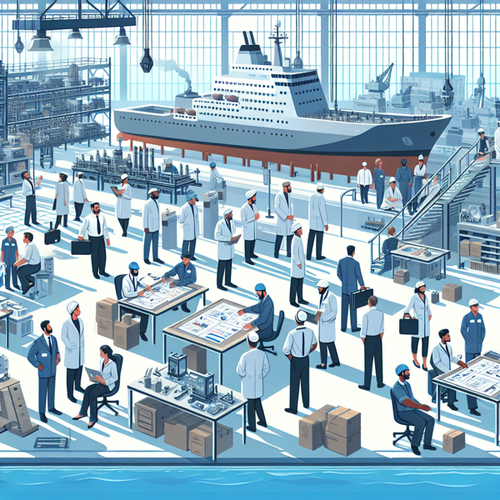
In the rapidly evolving global maritime industry, reliable standards for deck equipment and installations have become non-negotiable. Deck components—like coupling devices, ladders, and mooring lines—not only determine safety and performance at sea but also the industry’s ability to scale operations and remain compliant with international regulations. This overview explores four internationally recognized standards critical to shipbuilders, operators, and manufacturers, setting out clear and practical safety, design, and maintenance requirements for vessels of all types. Adopting these standards isn’t just about regulatory box-ticking: it’s a proven strategy for advancing operational safety, efficiency, and the overall productivity of maritime businesses.
Overview / Introduction
Deck equipment and installation standards form the backbone of modern shipbuilding and maritime operations. In an environment where the margin for error is slim and the potential impact on safety, assets, and human lives is immense, consistent guidelines ensure that equipment is reliable, maintainable, and safe to use. With increasing vessel complexity, frequent regulatory updates, and the advent of digital ship management, rigorous adherence to these standards is key for scaling and future-proofing ship operations.
Today’s article breaks down four cornerstone standards—EN ISO 6218:2005, EN ISO 9519:2023, ISO 18821:2025, and ISO 799-2:2021—highlighting their scope, essential requirements, and tangible benefits for businesses across the maritime sector.
Detailed Standards Coverage
EN ISO 6218:2005 - Coupling Devices for Inland Vessels
Inland navigation vessels – Manually operated coupling devices for push tows – Safety requirements and main dimensions (ISO 6218:2005)
This standard addresses manually operated coupling devices used to connect inland navigation vessels as push tows or when vessels are coupled alongside. It provides precise requirements for the safety, strength, and main dimensions of these devices, focusing on wire rope connections. The aim is to ensure reliable, safe, and maintainable connections that minimize risks associated with towing operations on inland waterways.
Key requirements include minimum strength specifications for drums, handwheels, pawls, ratchets, foot brakes, and protective components. Detailed design provisions cover left- and right-hand models, foundation types, arresting devices, and gear mechanisms. Rigorous provisions for materials and manufacturing, certification, marking, and comprehensive operating instructions ensure that all deployed coupling equipment meets the highest safety and usability benchmarks.
Organizations involved in the construction, operation, or maintenance of inland ships, as well as manufacturers and suppliers of coupling equipment, must implement this standard to comply with best practice, regulatory, and operational demands.
Key highlights:
Defines main dimensions and structural integrity for coupling devices on inland vessels
Specifies mandatory safety and strength requirements for all components
Details manufacturer obligations for certification and thorough operating instructions
Access the full standard: View EN ISO 6218:2005 on iTeh Standards
EN ISO 9519:2023 - Dog-Step Ladder Rungs for Ships
Ships and marine technology – Single rungs and rungs for dog-step ladders (ISO 9519:2023)
Dog-step ladders are vital for safe vertical movement on ships, especially on structures where space is tight or conventional ladders are impractical. EN ISO 9519:2023 defines technical requirements for single rungs and complete rungs used in these ladders, including their types, structure, dimensions, and material properties.
The standard provides clear classifications for rung types (such as Type A, Type B, and Type C), detailed diagrams for correct usage and installation, and acceptance criteria for materials, surface treatments, tolerances, and appearance. Inspection guidelines ensure that dog-step ladders provide reliable access and fall protection for crew in engine rooms, vertical panels, or on masts.
Ship designers, builders, and operators rely on this standard to choose, install, and maintain ladder systems that meet modern safety and ergonomic standards—crucial for accident prevention and regulatory compliance.
Key highlights:
Standardizes dimensions and performance of dog-step ladder rungs for maritime use
Sets out mandated inspection and acceptance procedures
Enhances crew safety and accessibility in demanding shipboard environments
Access the full standard: View EN ISO 9519:2023 on iTeh Standards
ISO 18821:2025 - Marine Combined Connecting Mooring Line
Ships and marine technology — Marine combined connecting mooring line
Mooring lines are fundamental to vessel safety at port and during mooring maneuvers, particularly for large vessels such as tankers. ISO 18821:2025 sets out comprehensive classification, design, testing, and inspection requirements for marine combined connecting mooring lines. These lines comprise a mooring rope, a connection device, and a tail, engineered to withstand immense forces and unpredictable environmental stresses.
The document formally classifies combined lines by connection method (T type, M type, C type), stipulating structure, dimensional codes, and standards for all components. It elaborates on selection and testing of steel wire ropes, high modulus polyethylene ropes, aramid and liquid crystal polymer ropes, and specifies the material and proof/ultimate loads for connection devices and tails.
Manufacturers, shipbuilders, port operators, and logistics planners will benefit from ISO 18821’s focus on traceability, performance data, testing methodology (break force, proof load, axial compression, and endurance), and the integration of high-tech materials for extended line life and reliability under cyclical loading.
Key highlights:
Fully classifies and codifies all combined mooring line types and materials
Prescribes exact testing methods for critical performance parameters
Includes detailed marking, designation, and reporting requirements for full lifecycle traceability
Access the full standard: View ISO 18821:2025 on iTeh Standards
ISO 799-2:2021 - Pilot Ladders: Maintenance, Use, Survey, and Inspection
Ships and marine technology — Pilot ladders — Part 2: Maintenance, use, survey, and inspection
Pilot ladders represent a unique safety risk: they enable pilots and personnel to board or leave ships at sea or in harbor, often in challenging conditions. ISO 799-2:2021 fills the gap left by earlier IMO regulations by specifying the inspection, storage, maintenance, and usage practices required to keep pilot ladders in serviceable and safe condition.
Key elements include mandatory pre-use and periodic inspection routines, clear intervals for full survey (including manufacturer guidance and classification society checks), requirements for recordkeeping and repair (including the number and replacement of steps), and stringent criteria for withdrawal from service when ladders show signs of degradation. The standard also enforces rigorous training and risk assessment protocols for personnel handling ladders, comprehensive care and stowage instructions, and audit-ready documentation.
This standard is essential for shipowners, operators, port authorities, and classification societies seeking to minimize incidents, demonstrate compliance, and foster a strong safety culture aboard ships.
Key highlights:
Mandates systematic inspection, repair, and recordkeeping for all pilot ladders
Integrates periodic training, care, and risk management measures for personnel
Aligns closely with IMO and ISO safety requirements, ensuring regulatory compliance
Access the full standard: View ISO 799-2:2021 on iTeh Standards
Industry Impact & Compliance
Robust deck equipment and installation standards influence every facet of ship construction, operation, and maintenance. As safety regulations tighten and insurers demand verifiable, documented compliance, these standards provide an essential benchmark for shipyards, manufacturers, equipment suppliers, and vessel operators. By implementing these standards rigorously, organizations accomplish the following:
Reduce accident and injury rates: Clear technical requirements and testing regimes result in safer, more reliable shipboard equipment, directly lowering risk to crew and pilots.
Achieve regulatory compliance: Adherence to internationally recognized standards is increasingly a prerequisite for flag state and port state approval, class certification, and insurance.
Enable scalability and modernization: Uniform engineering and performance criteria help organizations standardize operations, streamline procurement, and scale fleets without sacrificing safety or performance.
Mitigate operational risks and downtime: Well-designed, maintained, and documented equipment ensures smoother operations, fewer failures, and rapid problem resolution.
Enhance reputation and market access: Clients, port authorities, and regulatory agencies trust organizations that demonstrate proactive compliance, boosting competitiveness and profile.
Risks of non-compliance can be severe, including costly delays, withdrawal of certification, reputational damage, or—most importantly—serious incidents jeopardizing lives and cargo.
Implementation Guidance
To successfully implement deck equipment and installation standards within your organization, consider the following best practices:
Map Equipment and Operations: Inventory all relevant equipment, identifying where and how each standard applies, from vessel design through daily operations.
Engage Specialist Suppliers: Source equipment (coupling devices, ladders, mooring lines) from vendors whose manufacturing, documentation, and certification processes align with the standards.
Develop Training and Procedures: Train crew and maintenance personnel on correct usage, inspection, recordkeeping, and emergency protocols as required by each standard. Consider digital solutions for checklists and audit trails.
Schedule Maintenance and Audits: Establish and enforce inspection routines—including pre-use, routine, and periodic inspections—based on manufacturer/standard recommendations.
Document Everything: Maintain detailed records of certificate compliance, inspections, repairs, replacements, and training for audit readiness and liability protection.
Invest in Certification: Where feasible, obtain formal certifications for equipment and processes through classification societies or recognized organizations.
Organizations should leverage resources provided by the International Organization for Standardization (ISO), the Comité Européen de Normalisation (CEN), and platforms like iTeh Standards to stay updated on amendments, new editions, and related guidance.
Conclusion / Next Steps
Deck equipment and installation standards are foundational to maritime safety, efficiency, and operational excellence. Their scope—covering everything from the design of coupling devices and rungs, through to mooring line classification and pilot ladder maintenance—reflects the complexity and importance of well-engineered shipboard systems. Implementing these four international standards is not only a matter of compliance: it’s a proven investment in safer workplaces, optimized workflows, and long-term reputational and commercial gains.
For businesses wanting to improve productivity, guarantee security, and scale with confidence, these standards are indispensable. Organizations are encouraged to explore the full texts, incorporate them into quality management systems, and stay proactive as regulations and best practices evolve.
Visit iTeh Standards to access the latest versions, implementation guides, and remain at the forefront of shipbuilding excellence.


Comments