Plastics Pipes Standards: Ensuring Reliability and Innovation in Fluid System Rehabilitation

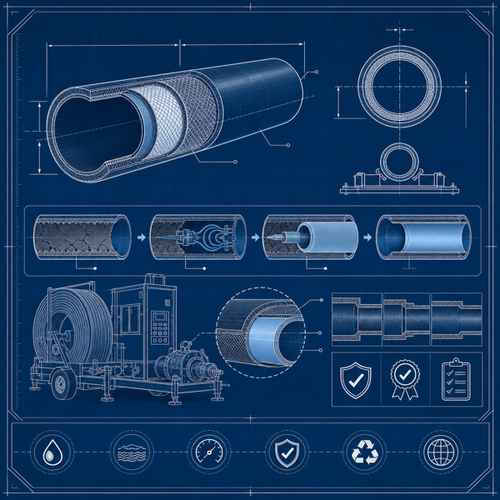
Plastics pipes play a vital role in shaping today’s water, wastewater, and fluid management systems. As industries across the globe embark on advanced rehabilitation of underground drains, sewers, and water supply networks, rigorous standards are essential to ensure reliability, safety, and scalability. Four key international standards for plastics pipes, including ISO 11300-1:2026 and ISO 11300-3:2026, alongside their associated conformity assessment specifications, have emerged as must-haves for businesses modernizing infrastructure with innovative technologies.
Embracing these standards not only enhances productivity, risk mitigation, and quality, but also unlocks opportunities to scale resilient, secure, and compliant fluid systems—vital for future-proofing municipal and industrial utilities. Let’s explore the foundations, requirements, benefits, and implementation guidance for these plastics pipes standards and understand their transformative impact on businesses today.
Overview / Introduction
In today’s interconnected world, the global demand for resilient and efficient underground piping systems has never been greater. From city water mains to industrial drainage, the need for safe, sustainable, and cost-effective rehabilitation technologies is driving major investments in plastics pipes. However, achieving performance, longevity, and safety in these applications is only possible when manufacturers, suppliers, and utilities align with robust plastics piping standards that govern material quality, installation practices, and conformity assessment.
The standards covered in this article are recent, internationally recognized publications that set out comprehensive requirements for the design, manufacture, and installation of polyethylene (PE) and unplasticized polyvinyl chloride (PVC-U) pipes and fittings for underground fluid system rehabilitation. In addition, the corresponding technical specifications define detailed procedures for verifying compliance and establishing a trusted quality assurance framework.
By mastering the essentials of these standards, professionals will:
Understand the technical specifications for different plastics piping materials and rehabilitation techniques
Learn about rigorous test methods, installation practices, and regional requirements
Evaluate how conformity assessments and quality systems support ongoing compliance and certification
Discover the practical benefits of implementing these specifications, such as increased productivity, improved water security, and scalable solutions during technical migrations
Whether you are a municipal engineer, civil contractor, manufacturer, or project manager, this article serves as your in-depth guide to plastics pipes standards for modern fluid systems.
Detailed Standards Coverage
ISO 11300-1:2026 – Polyethylene (PE) Systems for Underground Rehabilitation
Piping systems for rehabilitation of underground drains, sewers and water supply networks — Part 1: Polyethylene (PE) material
This international standard specifies the essential requirements for polyethylene (PE) pipes, fittings, and assemblies used in the rehabilitation of both non-pressure and pressure underground drains, sewers, and water supply networks. The document is designed for renovations and trenchless replacement techniques, enabling asset owners to renew failing pipelines without disruptive excavation.
The standard covers:
Requirements for solid wall single-layered or co-extruded, and PE-coated pipes
Guidance for renovations using continuous or close-fit lining pipes
Specifications for trenchless replacements, such as pipe bursting, extraction, horizontal directional drilling (HDD), and impact moling
Reference operating temperature: 20°C (for elevated temperatures, refer to ISO 4427-1:2019)
Scope and key provisions include:
Full lifecycle requirements: as manufactured and as installed
Butt fusion, electrofusion, and mechanical jointing for assemblies
Test methods to confirm appearance, geometry, mechanical, and physical integrity
Additional requirements according to specific rehabilitation techniques (Annexes A-D)
Installation practices: preparatory work, handling, equipment, safety, inspection, and documentation
Regional requirements and identification marking for traceability
Who needs to comply?
Municipal water authorities
Sewer and drain rehabilitation contractors
Pipe and fitting manufacturers
Engineering design firms specializing in trenchless technology
Utilities adopting high-performance PE solutions for critical infrastructure
Key highlights:
Thorough requirements for both product and installed performance
Enables diverse rehabilitation techniques, including trenchless methods
Includes test protocols for mechanical and long-term durability
Access the full standard: View ISO 11300-1:2026 on iTeh Standards
ISO 11300-3:2026 – PVC-U Systems for Underground Drain and Sewer Rehabilitation
Piping systems for rehabilitation of underground drains, sewers and water supply networks — Part 3: Unplasticized poly (vinyl chloride) (PVC-U) material
ISO 11300-3:2026 is dedicated to unplasticized PVC piping systems for the rehabilitation of non-pressure underground drains and sewers. The standard’s focus is the “lining with close-fit pipes” technique, which addresses the need for minimally disruptive pipeline renewal in urban environments.
Scope and notable features:
Requirements and test methods for PVC-U pipes and fittings, both as-manufactured and as-installed
Applicability to systems intended for service temperatures up to 35°C
Not applicable for rehabilitation of pressurized pipes with PVC-U
Covers only non-pressure applications to ensure optimal performance in common drainage scenarios
Key implementation areas:
Quality assurance on materials (virgin and reprocessable)
Mechanical and geometric performance testing
Detailed provisions for jointing, installation, storage, and quality documentation
Close-fit lining methods, emphasizing a near-interference fit to the host pipe for structural renewal
Who should comply?
Utilities and municipalities managing non-pressure drain and sewer rehabilitation
Sewer network refurbishment contractors
Pipe system manufacturers and suppliers focused on PVC-U solutions
Key highlights:
Defines product and installation requirements exclusively for close-fit lining
Guarantees compatibility and performance within specified temperature ranges
Supports standardized documentation and regional adaptation
Access the full standard: View ISO 11300-3:2026 on iTeh Standards
ISO/TS 23818-1:2026 – Conformity Assessment for PE Piping Systems
Assessment of conformity of plastics piping systems for the rehabilitation of existing pipelines — Part 1: Polyethylene (PE) material
This technical specification provides a comprehensive scheme for assessing conformity of PE piping products and assemblies deployed in pipeline rehabilitation projects. ISO/TS 23818-1:2026 is pivotal to quality assurance during both manufacturing and installation, referencing ISO 11300-1 and complementing quality management systems.
This document introduces:
Type testing, batch release testing, process verification, and audit procedures
Grouping systems for sizes and fittings to streamline testing
Sampling plans and requirements for traceable, repeatable testing
Detailed annexes with test procedures for non-pressure and pressure applications
Guidelines for inclusion in manufacturers’ quality plans and for establishing certification schemes
Practical implications:
Ensures PE pipes and fittings meet performance and safety criteria throughout the rehabilitation life cycle
Facilitates third-party certification and continuous improvement within regulated projects
Target users:
Manufacturers of PE piping
Certification bodies and testing laboratories
Quality assurance professionals in plastics piping
Asset managers overseeing rehabilitation compliance
Key highlights:
Defines a robust, auditable pathway for quality assurance
Integrates seamlessly with ISO 9001-based quality management systems
Supports certification and trusted supply chain integrity
Access the full standard: View ISO/TS 23818-1:2026 on iTeh Standards
ISO/TS 23818-3:2026 – Conformity Assessment for PVC-U Piping Systems
Assessment of conformity of plastics piping systems for the rehabilitation of existing pipelines — Part 3: Unplasticised poly(vinyl chloride) (PVC-U) material
This technical specification mirrors the conformity assessment principles of ISO/TS 23818-1 but is tailored to PVC-U piping systems used exclusively with the close-fit lining technique. ISO/TS 23818-3:2026 supports systematic quality planning, type and batch testing, and full integration with existing quality management systems for manufacturers.
Scope and requirements cover:
Assessment regimes: type testing, batch release, process verification, audit, and indirect testing
Detailed specification for testing non-pressure drain and sewer applications
Annexes containing mandatory and summarised requirements supporting manufacturing and certification
Recommended inclusion in manufacturer’s quality documentation
Why this matters:
PVC-U products require precise characterization due to their sensitivity in non-pressure environments
Standardized conformity schemes streamline risk management, product acceptance, and client confidence
Users include:
Manufacturers of PVC-U piping systems
Testing laboratories and third-party certifiers
Drainage authorities managing product approvals
Key highlights:
Ensures integrity and interoperability for PVC-U-based rehabilitation
Aligns with ISO 11300-3 to guarantee consistent product properties
Facilitates efficient certification and project documentation
Access the full standard: View ISO/TS 23818-3:2026 on iTeh Standards
Industry Impact & Compliance
Adhering to plastics piping system standards has a transformative impact on sector productivity, security, and sustainable scaling. The harmonized specifications for PE and PVC-U systems support:
Safer, cleaner water delivery: Ensured by rigorous material properties and traceability
Resilient infrastructure: Standards-led rehabilitation extends asset lifecycle and reduces maintenance frequency
Regulatory compliance: Alignment with international requirements mitigates legal and reputational risks
Market access and certification: Auditable conformity assessment protocols facilitate local and global acceptance
Cyber-physical security: Standardized installation and documentation reduce vulnerability across smart water utilities
Innovation and scalability: Technical interoperability fosters rapid adoption of modern trenchless and close-fit lining techniques, lowering costs and minimizing public disruption
Businesses that build their rehabilitation strategies around these standards are more likely to realize higher operational efficiency, public trust, and long-term cost savings.
Implementation Guidance
Implementing these standards is a strategic process involving several best practices:
Gap Assessment: Review current materials, installation techniques, and testing protocols against ISO 11300 and ISO/TS 23818 requirements.
Training and Awareness: Ensure your teams—from engineers to installers—are educated about technical and safety requirements.
Quality Management System Integration: Incorporate conformity assessment regimes into your ISO 9001 (or equivalent) systems, covering type, batch release, and audit testing.
Supplier and Manufacturer Collaboration: Work closely with your supply chain to source certified, compliant pipes and fittings.
Onsite Verification and Record-Keeping: Adhere to test, inspection, and documentation regimes as outlined, especially during installation and commissioning.
Continuous Monitoring: Undertake periodic audits, leveraging risk-based approaches and process verification tests for continued compliance.
Key implementation resources include:
Training from accredited standards organizations
Certification programs through recognized bodies
Partnering with experienced testing laboratories
Installation manuals and annexes provided within the standards
Conclusion / Next Steps
The rehabilitation of underground fluid systems is no longer simply about repair—it’s about precision, durability, and future-readiness. Understanding and implementing international standards like ISO 11300-1:2026, ISO 11300-3:2026, and their associated conformity assessment specifications is essential for any organization aiming to modernize its assets responsibly and efficiently.
These standards empower businesses to:
Enhance productivity through standardized practices
Improve the security and reliability of critical infrastructure
Achieve scalable, sustainable growth in rapidly changing urban and industrial environments
Guarantee compliance, certification, and long-term asset value
Recommendation: Explore each standard in detail, assess your organization’s current practices, and make a strategic plan for compliance. Leverage the expert resources at iTeh Standards to stay current and ensure your projects meet the highest benchmarks of quality, safety, and performance.


When talking about any game, I feel that looking only at the final result is not enough. Goa Game login Understanding the gameplay, rules, different situations, and the decisions players make gives a much better overall picture.
New players often have genuine questions when they first come across a goa games login Answering those questions patiently and explaining things in simple language can make the community more helpful and welcoming for everyone.
I liked this article because it explains the game and account process without making things sound too complicated. I checked the official website before reviewing the app download information. The register instructions were simple, and the login details were also clearly presented. I also read about various online Tiranga Games available through the platform. It gives beginners enough background to understand the basic process before exploring the app further.