The Essential Guide to Domestic Safety Standards: Enhancing Home and Environmental Security

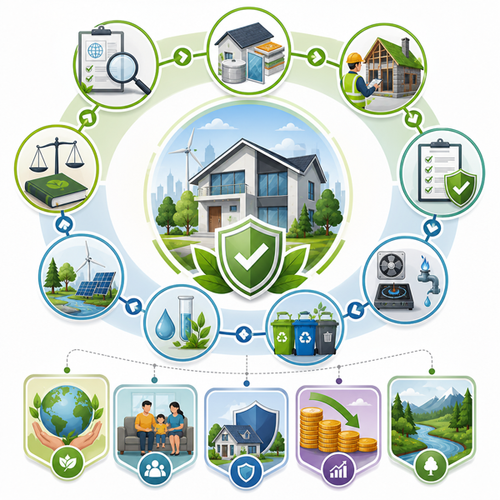
Safety and sustainability have become non-negotiable priorities for modern homes and businesses, especially as new technologies transform the way we live and work. The rapid adoption of electrical appliances, water treatment technologies, aerosol devices, and high-pressure equipment demands rigorous standards to protect users and the environment. In this comprehensive guide, we explore four critical international standards shaping domestic safety: IEC 60335-2-109:2023, IEC 60335-2-120:2024, IEC 60335-2-2:2026, and IEC 63458-1:2026. Understanding and implementing these standards not only enhances safety, but also boosts productivity, fosters compliance, and supports the scalable, secure integration of new solutions into daily life and business operations.
Overview / Introduction
In today’s fast-paced society, the household is no longer just a living space—it’s a center of technological activity, environmental interaction, and personal well-being. The appliances and systems we use—whether for cleaning, water purification, or personal care—have direct impacts on our health and environmental sustainability. Unfortunately, new risks can arise with innovation: electrical faults, dangerous emissions, improper installation, and unsafe usage scenarios.
To address these evolving challenges, international standards exist as technical baselines, offering verified requirements, guidelines, and best practices for manufacturers, service providers, and even end users. Compliance with the latest domestic safety standards is not just about meeting legal requirements; it’s about protecting families, supporting business continuity, and ensuring scalability as your needs grow. In this article, you’ll learn:
The scope and key requirements of four influential standards for domestic safety
Why these standards matter in everyday environments and business contexts
Practical benefits of implementing these specifications for productivity and security
How businesses can effectively adopt these guidelines for compliance and operational excellence
Detailed Standards Coverage
IEC 60335-2-109:2023 – Safety Requirements for UV Radiation Water Treatment Appliances
Household and similar electrical appliances – Safety – Part 2-109: Particular requirements for UV radiation water treatment appliances
Water quality is a critical aspect of public health and domestic life. The rise in popularity of UV radiation water treatment devices—used for disinfecting water in homes, shops, light industry, and farms—makes robust safety regulations essential. IEC 60335-2-109:2023 addresses the unique hazards associated with these appliances, including electrical risks, UV exposure, and environmental factors.
What This Standard Covers
This standard sets out safety requirements for UV water treatment appliances with rated voltages up to 250V (single-phase) and 480V (other appliances), including battery-operated and DC-supplied units. It addresses typical residential installations and extends to environments where such appliances might be used by the general public, such as shops or farms.
Key Requirements and Specifications
Electrical and Fire Safety: Detailed procedures for protection against electric shock, overheating, and fire.
UV Radiation Hazards: Requirements for labeling, warnings, and safety mechanisms to prevent unsafe exposure to UV-C radiation.
Mechanical Safeguards: Specifications for structural integrity, stability, and mechanical strength.
Environmental Protection: Emphasis on water ingress protection (IPX ratings), corrosion resistance, and compatibility with typical household installations.
User Information: Mandated instructions and markings to guide safe operation and maintenance, including warnings concerning UV emitters.
Remote Operation: Clarifies safe methods for remote control access and limits on temperature of accessible surfaces.
Symbol Use and Harmonization: Introduction of IEC 60417 symbols for clarity and alignment with global best practices.
Who Needs to Comply?
Manufacturers of UV water treatment systems for home, retail, and light industrial use
Installers and service providers in plumbing and water purification
Retailers supplying domestic water treatment solutions
Occupational safety professionals and regulators in water supply and environmental health
Practical Implications
Implementing this standard minimizes risk of electrical faults and exposure to harmful UV radiation, while ensuring that appliances can be safely used and maintained even by non-experts. It streamlines market entry by harmonizing product requirements globally, and enhances business reputation by demonstrating compliance with recognized safety norms.
Key highlights:
Advanced IPX protection and mechanical safeguards
Clearly defined markings and warnings for UV hazards
Updated alignment with IEC 60335-1:2020 for best-practice consistency
Access the full standard: View IEC 60335-2-109:2023 on iTeh Standards
IEC 60335-2-120:2024 – Safety of Appliances Generating Directly Inhalable Aerosols
Household and similar electrical appliances – Safety – Part 2-120: Particular requirements for the safety of appliances for the generation of directly inhalable aerosols
With the explosion in popularity of electronic cigarettes, vaping devices, and other personal aerosol appliances, clear safety guidelines are more essential than ever. IEC 60335-2-120:2024 was developed in direct response to the evolving landscape of personal vaporizer technologies, including nicotine and non-nicotine delivery systems.
What This Standard Covers
This standard applies to home and similar-use appliances that generate aerosols intended for direct human inhalation. Examples include vaporizers, e-cigarettes, electronic nicotine delivery systems (ENDS), and electronic non-nicotine delivery systems (ENNDS). It covers devices with voltages up to 250V for single-phase units and DC/battery-powered variants.
Key Requirements and Specifications
Electrical Safeguards: Tests for protection against shock, thermal risks, and short-circuits.
Operational Classifications: IPX4 rating as a baseline (protection against splashing water), with further rules for detachable batteries and chargers.
Marking & User Instructions: Precise requirements for labeling, including mandatory warnings to guide safe use—especially for vulnerable users such as children or persons with disabilities.
Battery Safety: Rigorous testing and conformity requirements for metal-ion battery charging to prevent overheating or leakage.
Applicability Limits: Exclusions for medical ventilators and certain humidifiers, with focus strictly on personal and household aerosol generation.
Consumables Exclusion: The standard addresses the electrical and mechanical safety of the device only (not the chemical safety of e-liquids or other consumables).
Who Needs to Comply?
Manufacturers of e-cigarettes, personal vaporizers, and electronic inhalation devices
Distributors and retailers of consumer aerosol appliances
Regulatory agencies overseeing product safety in personal health and well-being
Designers of innovative aerosol-generating technologies
Practical Implications
By following this standard, businesses reduce risks associated with device malfunction, overheating, or accidental user injury. It supports faster regulatory approval and safer product launches into growing consumer markets. For users, it provides greater assurance that products meet the highest electrical safety and user protection benchmarks.
Key highlights:
Comprehensive coverage for all battery-operated aerosol devices
Focus on user and child safety with clear operational warnings
Does not address chemical composition of consumables—strictly device safety
Access the full standard: View IEC 60335-2-120:2024 on iTeh Standards
IEC 60335-2-2:2026 – Safety for Vacuum Cleaners and Water-Suction Cleaning Appliances
Household and similar electrical appliances – Safety – Part 2-2: Particular requirements for vacuum cleaners and water-suction cleaning appliances
The humble vacuum cleaner has evolved into a high-tech, multifunctional appliance found in nearly every household, office, and hospitality setting. With increasing complexity—robotic operation, water suction, animal grooming functions, and motorized cleaning heads—the need for updated safety standards is great. IEC 60335-2-2:2026 provides exhaustive safety specifications that minimize risks from electric shock, mechanical failure, and misuse.
What This Standard Covers
Applies to electric vacuum cleaners and water-suction cleaning appliances, including battery- and DC-powered devices, for household and similar purposes. It extends to centrally-sited vacuum systems, animal grooming vacuum cleaners, and spray-extraction types within defined temperature and pressure limits.
Key Requirements and Specifications
Electrical Safety: Maximum rated voltage of 250V (single-phase), 480V (multi-phase systems).
Thermal and Overload Protection: Specifications for safe temperature rise, thermal cutoff, and protection against motor overload.
Mechanical Design: Robustness tests for physical stability, impact resistance, and endurance.
Battery Safety: Extended rules for battery management and metal-ion safety (including large, non-portable battery systems).
Environment and Application: Clear differentiation between devices for household, semi-public, and small commercial use, with practical limits for water temperature and pressure.
Comprehensive Annexes: Detailed procedures for compliance testing, battery management, overvoltage protection, and environmental resistance.
Exclusions: Does not apply to purely industrial equipment or specialized commercial cleaners (cross-references to other IEC appliance standards).
Who Needs to Comply?
Manufacturers and brands of household, robotic, and water-suction vacuum cleaners
Hospitality sector and building facilities managers
Service companies and maintenance professionals
Regulatory bodies focused on consumer product safety
Practical Implications
Adoption guarantees improved operational reliability, longer equipment lifespan, and lower maintenance costs. Enhanced safety requirements also protect children, pets, and vulnerable users in home and public environments. Businesses benefit from easier access to diversified international markets by aligning with up-to-date global benchmarks.
Key highlights:
Covers new device categories: animal grooming, robotic vacuums, spray extraction
Advanced rules for large battery systems in modern cleaning appliances
Full compatibility with the latest IEC 60335-1 and battery safety protocols
Access the full standard: View IEC 60335-2-2:2026 on iTeh Standards
IEC 63458-1:2026 – Safety Requirements for High Pressure Water Jet Units
High pressure water jet machines – Safety – Part 1: High pressure water jet units
High pressure water jet machines are indispensable in modern cleaning, industrial surface preparation, concrete repair, and material cutting tasks. Yet their inherent risks—severe mechanical forces, water injection injuries, electrical hazards, and instability—demand robust safety regulation. IEC 63458-1:2026 is the global point of reference for safety and compliance in high-pressure water jet operations.
What This Standard Covers
The standard defines technical safety requirements for mobile and fixed high-pressure water jet units (driven by electric motors, combustion engines, or hydraulics) where the working pressure exceeds 35 MPa—beyond the coverage of lower-grade cleaner or consumer devices. Typical applications span heavy-duty cleaning, surface preparation, concrete readjustment, and industrial cutting.
Key Requirements and Specifications
Mechanical Hazards: Comprehensive assessment of stability, operator safety, structural integrity, and resistance to mechanical failures.
Pressure Testing: Rigorous hydrostatic testing protocols for system safety under pressure, with clear operational tolerances and repair guidelines.
Electrical Safety: Requirements for wiring, protection against moisture ingress, and emergency stop functionality.
Temperature and Noise Control: Limits for accessible surface temperatures, and noise reduction measures at design and operational stages.
Clear Markings and Instructions: Prescriptive labeling and operational warnings (including ISO and IEC safety symbols) for both users and maintenance staff.
Regular Verification and Inspection: Mandates for routine safety checks and comprehensive record-keeping.
Exclusions: Specifies boundaries with related standards covering lower pressure machines and unique applications (e.g., operation in explosive atmospheres is not covered).
Who Needs to Comply?
Manufacturers of industrial-grade high-pressure water jet machines
Engineering and construction firms using high-pressure water jets
Service providers in industrial cleaning, demolition, or concrete repair
Occupational safety and regulatory compliance authorities
Practical Implications
Implementation of IEC 63458-1:2026 ensures that workplaces and public environments are shielded from the potentially catastrophic hazards of high-pressure water jet machinery. It helps companies scale operations safely, support training and inspection routines, and meet insurance and legislative requirements in global markets.
Key highlights:
Addresses all relevant hazards: mechanical, electrical, noise, and thermal
Mandatory emergency stop and labeling for user safety
Structured hydrostatic and routine test requirements
Access the full standard: View IEC 63458-1:2026 on iTeh Standards
Industry Impact & Compliance
How These Standards Affect Businesses and Stakeholders
Whether you are a manufacturer, facility manager, installer, or public health official, compliance with these domestic safety standards is now a must—not just a competitive advantage, but often a legal or insurance requirement.
Business Benefits of Compliance
Enhanced Brand Trust and Market Entry: Demonstrating adherence to recognized international safety standards streamlines certification, opens new markets, and reassures end users and regulators.
Reduced Liability and Insurance Costs: Lower risk of product recalls, injury claims, or litigation due to well-documented compliance.
Increased Productivity and Scalability: Standardized, safe products reduce downtime, support automated or remote operations, and scale efficiently across multiple locations or regions.
Support for Technological Innovation: Clear requirements enable faster, safer integration of new features—such as remote appliance monitoring or smarter battery systems—without risking user safety.
Risks of Non-Compliance
Failure to adhere to relevant domestic safety standards can result in:
Regulatory fines and product recalls
Injuries, property damage, or environmental incidents
Loss of business reputation and consumer trust
Legal barriers to expanding in international markets
Compliance Considerations
Periodic Review and Updates: Standards evolve; ensure your organization tracks updates and amends practices accordingly.
Comprehensive Documentation: Maintain robust documentation, including test records, audits, and user instructions for all products and installations.
Staff Training and Certification: Ongoing training programs for staff are critical for maintaining compliance, especially as appliances become more complex.
Implementation Guidance
Common Implementation Approaches
Gap Analysis: Benchmark existing appliances or practices against the latest standard revisions. Identify non-conformities.
Design Stage Integration: Incorporate standards from the earliest R&D and design stages; retrofitting is often complex and costly.
Supplier and Partner Assurance: Evaluate the conformity of all components and systems sourced from third parties.
Testing, Certification, and Auditing: Use accredited laboratories and certified inspectors for formal testing and routine inspections.
End-User Education: Supply clear, accessible manuals and training for users to ensure safe operation, maintenance, and troubleshooting.
Best Practices for Adopting Domestic Safety Standards
Work with recognized certification bodies to validate product compliance.
Leverage digital compliance management tools for ongoing auditing and documentation.
Establish rapid incident reporting and feedback channels within your organization.
Foster a culture of safety and continuous improvement—make standards a cornerstone, not an afterthought.
Align with environmental regulations and sustainability targets, as many standards cross-reference energy efficiency and material safety.
Resources for Organizations
Access the original standards and all updates via platforms like iTeh Standards
Participate in industry association working groups for the latest best practices
Consult with product safety consultants, especially for complex devices (e.g., high-pressure water jet machines)
Invest in staff training and upskilling with reference to relevant IEC, ISO, and local regulations
Conclusion / Next Steps
Domestic safety standards are foundational pillars for safer homes, more robust environmental protection, and successful, scalable business operations. The standards highlighted in this article—IEC 60335-2-109, IEC 60335-2-120, IEC 60335-2-2, and IEC 63458-1—address the modern realities of energy-efficient homes, advanced domestic appliances, and professional-grade equipment. By understanding, adopting, and embedding these requirements into product development, facility management, and day-to-day use, organizations can:
Increase productivity and reduce downtime through safer, more reliable products
Enhance security and peace of mind for users and operators
Smoothly implement new technologies at scale—without compromising safety
Future-proof operations as regulations and best practices evolve
Recommendations for Organizations:
Conduct regular reviews of your product and operational compliance with current standards
Make use of third-party resources and expertise where appropriate
Engage with the standards community to stay ahead of emerging risks and requirements
Ready to take the next step? Explore the full text of each standard on iTeh Standards to ensure you’re always on the leading edge of safety, compliance, and innovation.


Comments