Mastering Technical Drawings: Essential International Standards for Business Growth and Compliance

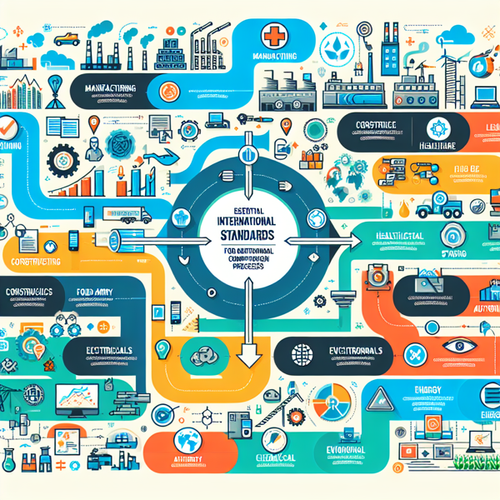
Technical drawings are the universal language of design, engineering, and fabrication—a bridge transforming ideas into reality. In today’s rapidly evolving industries, maintaining clarity, consistency, and conformity through standardization isn’t just smart; it’s essential. Whether creating optical systems, construction plans, or mechanical diagrams, adhering to the latest international standards for technical drawings ensures your documentation is precise, interoperable, and ready for global collaboration. In this guide, we’ll examine the four most critical standards you need to know, providing a roadmap to greater productivity, security, and business scalability.
Overview / Introduction
Technical drawings underpin virtually every sector where ideas must be communicated visually and unambiguously—from manufacturing and engineering to architecture and construction. The reliability of drawings directly impacts quality, compliance, safety, and operational efficiency. With rapid globalization and digitization, the demand for universally understandable and machine-readable documentation has never been higher. International standards exist to support this need, defining the rules, symbols, tolerances, and data structures that unify communication.
This article demystifies four key international standards for technical drawings:
The foundational conventions for all types of lines and graphical elements (EN ISO 128-2:2022)
The preparation of drawings for increasingly sophisticated optical elements, including diffractive surfaces (ISO 10110-16:2023)
Indicating precise centring and tilt tolerances for optical systems (ISO 10110-6:2025)
The clear indication of limit deviations in construction documentation (ISO 6284:2023)
Understanding and implementing these standards is not only vital for regulatory compliance but essential for boosting productivity, minimizing miscommunication, enhancing document security, and enabling projects to scale with ease.
In the sections that follow, each standard is explained in an approachable way—what it covers, who should use it, practical implications, and the benefits to your business.
Detailed Standards Coverage
EN ISO 128-2:2022 – Basic Conventions for Lines in Technical Product Documentation
Technical product documentation (TPD) – General principles of representation – Part 2: Basic conventions for lines (ISO 128-2:2022)
Every technical drawing, whether an engineering blueprint, electrical schematic, site plan, or shipbuilding diagram, relies on a set of graphical elements—especially lines—to convey information. EN ISO 128-2:2022 is the definitive international standard that defines these basic conventions and ensures universal clarity.
This standard establishes:
Types of lines (e.g., continuous, dashed, dotted), their designations, and configurations
General rules for drawing, aligning, and representing lines, leader lines, and reference lines
Guidelines for technical drawings in mechanics, civil engineering, shipbuilding, and more
The broad applicability means that any industry using technical drawings can benefit, including construction managers, architects, mechanical and civil engineers, product designers, and manufacturers. Consistent application avoids costly errors, improves project collaboration across borders, and supports the use of CAD systems for automation.
Implementation touches every phase of the drawing process, influencing how ideas are developed, reviewed, and communicated internally or with partners. Annexes provide field-specific guidance, including for CAD environments, mechanical drawings, and shipbuilding, ensuring relevance to both traditional and digital workflows.
Key highlights:
Unifies drawing conventions for all industry sectors
Essential for consistent interpretation in international projects
Supports both manual and CAD-based drafting
Access the full standard: View EN ISO 128-2:2022 on iTeh Standards
ISO 10110-16:2023 – Drawings for Optical Elements and Diffractive Surfaces
Optics and photonics — Preparation of drawings for optical elements and systems — Part 16: Diffractive surfaces
The rise of photonics and advanced optical technology has brought diffractive optical elements into mainstream applications—from imaging systems to augmented reality. ISO 10110-16:2023 introduces specialized methods to describe, present, and specify diffractive surfaces in technical drawings, ensuring precise manufacturing and quality control.
This standard covers:
Methods for representing diffractive optical functions on surfaces (planes, spheres, aspheres, general surfaces)
Description of coordinate systems (global and local) for accurate reference and alignment
Standards for symbols, notations, hatching, mathematical data, and data exchange—fostering both human and machine-readability
Crucially, ISO 10110-16:2023 is for engineers, optical designers, system integrators, and manufacturers working with advanced optics. It supports cross-disciplinary collaboration and the seamless translation of complex design intent from engineers to fabricators and quality assurance teams. While it excludes specific manufacturing methods and random diffractive structures, its focus on deterministic features standardizes the information needed for fabrication, testing, and inspection.
By implementing this standard, organizations reduce ambiguity in drawings, ensure functional performance, and streamline the innovation-to-production pipeline for cutting-edge optical devices.
Key highlights:
Defines clear presentation of diffractive optical features
Standardizes communication for optical element design and integration
Aids compliance in high-tech sectors where precision is non-negotiable
Access the full standard: View ISO 10110-16:2023 on iTeh Standards
ISO 10110-6:2025 – Optical Element Centring and Tilt Tolerances
Optics and photonics — Preparation of drawings for optical elements and systems — Part 6: Centring and tilt tolerances
Precision in optical design is as much about quality as it is about performance. ISO 10110-6:2025 provides comprehensive, industry-accepted rules for indicating centring and tilt tolerances in drawings for all types of optical surfaces and assemblies. It bridges the gap between design tolerances and actual production quality.
This standard details:
Specification of permitted offsets (decentre) and tilt for optical surfaces, subassemblies, and complete assemblies
Application to planar, spherical, aspherical, cylindrical, acylindrical, and non-symmetrical optical surfaces
Harmonization with schema and terminology from the broader ISO 10110 series, ensuring integration with other aspects of optical drawing preparation
It is critical for optical engineers, design and quality professionals, manufacturers of lenses and optical systems, and those responsible for metrology or integration of optical systems into larger assemblies. Strict adherence ensures that system performance matches simulation and design targets, preventing costly errors and misalignments in high-precision fields like medical devices, defense, aerospace, and imaging technology.
Practical application includes specifying datum features, axes, points, and conventions for communicating tolerances unambiguously. Changes in this edition clarify the definitions and provide more examples, making it easier to adopt best practices.
Key highlights:
Ensures precise manufacturing and inspection of optical elements
Reduces risk of costly misalignment during assembly
Supports interoperability in global supply chains and high-complexity systems
Access the full standard: View ISO 10110-6:2025 on iTeh Standards
ISO 6284:2023 – Indication of Limit Deviations in Construction Documentation
Technical product documentation — Construction documentation — Indication of limit deviations
The construction industry’s transition towards digitization and greater precision in offsite fabrication demands rigorous control over dimensional deviations. ISO 6284:2023 responds to this need, giving professionals a standard method to indicate upper and lower limit deviations in both graphical (drawing) and data template formats.
This updated standard covers:
How to express dimensional deviations (e.g., tolerances, fits) on construction documents, whether in text, notes, annotations, or drawings
Designations for popular deviation types such as length, angular, profile, straightness, flatness, skewness, verticality, and horizontality
Application guidance for both classic drawing-based and digital/BIM (Building Information Modeling) contexts
ISO 6284:2023 is for architects, engineers, construction managers, BIM professionals, and manufacturers of prefabricated components. Its adoption reduces misinterpretation, supports clash detection, and facilitates machine-readability for automated workflows.
Modern projects benefit as the standard supports both human recognition and computer parsing—critical for digital twins, 3D modeling, procurement, and on-site compliance verification.
Key highlights:
Supports quality and uniformity in both manual and digital workflows
Recognized by international contractors, suppliers, and public clients
Enables easy integration with BIM and modern digital construction processes
Access the full standard: View ISO 6284:2023 on iTeh Standards
Industry Impact & Compliance
Technical drawing standards have a profound impact on industries where errors can be costly—or even catastrophic. Implementing international standards:
Reduces misinterpretations and mistakes in production, assembly, or construction
Streamlines compliance with regulatory and client requirements
Builds trust and professionalism when bidding for or collaborating on global projects
Ensures interoperability between analog and digital workflows, especially vital as digital transformation accelerates
Failure to comply exposes organizations to significant risks: project delays, rework, failures to meet specification, safety and liability issues, or lost business opportunities. Conversely, standardized documentation accelerates onboarding, audit readiness, quality assurance, and customer satisfaction.
Implementation Guidance
Transforming compliance from obligation to opportunity requires purpose and process. Here are best practices for implementing these critical drawing standards:
Start with Training: Educate technical staff, designers, and project managers on the new standards. Leverage official documentation, professional courses, and internal workshops.
Integrate with Digital Tools: Ensure CAD, CAE, and BIM platforms support the latest standards settings, symbols, and output formats, minimizing manual corrections.
Document Processes: Update standard operating procedures and design manuals to embed compliant workflows; this reduces confusion and accelerates adoption.
Audit Regularly: Implement self-audits or peer reviews of technical documents to catch and correct inconsistencies before they leave the organization.
Leverage Authoritative Resources: Use platforms like iTeh Standards to access updates, authoritative guidance, and network with other compliance professionals.
Adopting standards also serves as a catalyst for broader business improvements—in digital transformation, innovation, and sustainability—by creating consistent, high-quality technical information.
Conclusion / Next Steps
Technical drawing standards are far more than bureaucratic checkboxes—they are business enablers. They drive clarity, efficiency, and global scalability through shared language and expectations. In this era of increasingly complex and interconnected industries, EN ISO 128-2:2022, ISO 10110-16:2023, ISO 10110-6:2025, and ISO 6284:2023 form the bedrock for confident, compliant, and forward-thinking organizations.
Key takeaways:
Investing in standardization pays dividends in productivity, security, and business growth
Global projects rely on clarity and consistency that only standards can ensure
Compliance with drawing standards is now a strategic imperative, not just a technical detail
Next steps:
Review which standards are most relevant to your organization’s workflows
Access and study the full texts via iTeh Standards
Update your teams and tools to integrate these requirements at every stage of documentation and design
Stay updated—explore and implement these leading standards to secure better project outcomes and a sustainable competitive edge.


I came across this article while searching for information, and I'm glad I did. It answered my questions clearly and provided additional insights I hadn't considered before. Thank you for creating such informative content. I will definitely check out your other articles and continue following your updates.
yaarwin || yaar win || yaar win game || yaarwin game || yaar win ||
PM Kisan KYC is an essential process that helps verify beneficiary information accurately. Completing KYC ensures that installment payments are transferred smoothly without interruption. Farmers can complete this process online or through nearby service centers conveniently. The pm kisan kyc verification system improves transparency, prevents fraudulent claims, and ensures that financial support reaches eligible beneficiaries correctly under the government scheme across the country effectively.
The game offers a clean and distraction-free experience. I liked how it keeps everything basic and easy to manage. It’s a comfortable choice for users who don’t want complicated gameplay.
daman game app
Trump threatens Bhulekh new tariffs on European allies over Greenland until deal reached, as thousands protest
Trump threatens Samagra new tariffs on European allies over Greenland until deal reached, as thousands protest